
REAL CLOTHES, REAL LIVEs: HOW EVERYDAY CLOTHING TELLS the story of WOMEN’S HISTORY
The New York Historical bypasses couture to show what house dresses, work uniforms, and other common garments reveal about two centuries of women’s lives
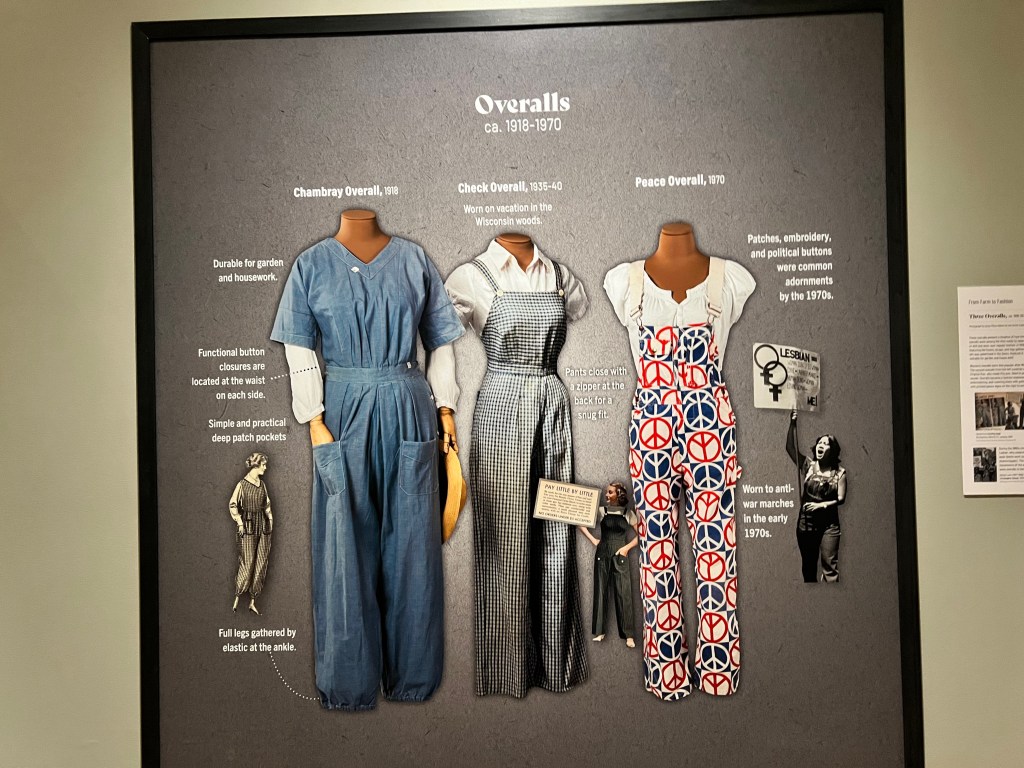
The evolution of women’s overalls from the Real Clothes, Real Lives exhibition at The New York Historical

Take a look at what you’re wearing right now.
What if, two hundred years from now, your outfit appeared in a cultural exhibition, and future generations studied it to make judgments about your identity, your work, and your life in general? That was the experience The New York Historical created with Real Clothes, Real Lives: 200 Years of What Women Wore.
The exhibit highlights pieces from the Smith College Historic Clothing Collection, founded by costume-design professor Kiki Smith. It was curated by Anna Danziger Halperin and Keren Ben-Horin of The New York Historical in collaboration with both Smith and Rebecca Shea. The curators present a compelling case that ordinary clothing is just as important in documenting women’s lives as letters, photographs, diaries, or other artifacts.
In fact, the “ordinary” is what makes this collection so interesting. There are no couture gowns or designer showstoppers that normally dominate fashion exhibitions. They are everyday dresses, uniforms, homemade garments, and commercially produced clothes worn by women who may have never even visited a museum. As I moved through the display of garments inside the intimate Joyce B. Cowin Women’s History Gallery, I noticed a recurring theme: the tension between women’s self-expression and society’s persistent desire to regulate their bodies, behavior, and clothing…a tension that has hardly disappeared.
Real Clothes, Real Lives examines what women wore through the lens of five distinct categories: the home, service work, acceptable public dress, female rites of passage, and boundary-pushing fashion. Let’s take a look at each.
1. THE HOME: clothing made for unseen women & unpaid work
The exhibit starts in the mid-1800s with two garments: a “house dress” and a “morning wrapper.” At the time, women and their (unpaid) work were both hidden away inside the home.
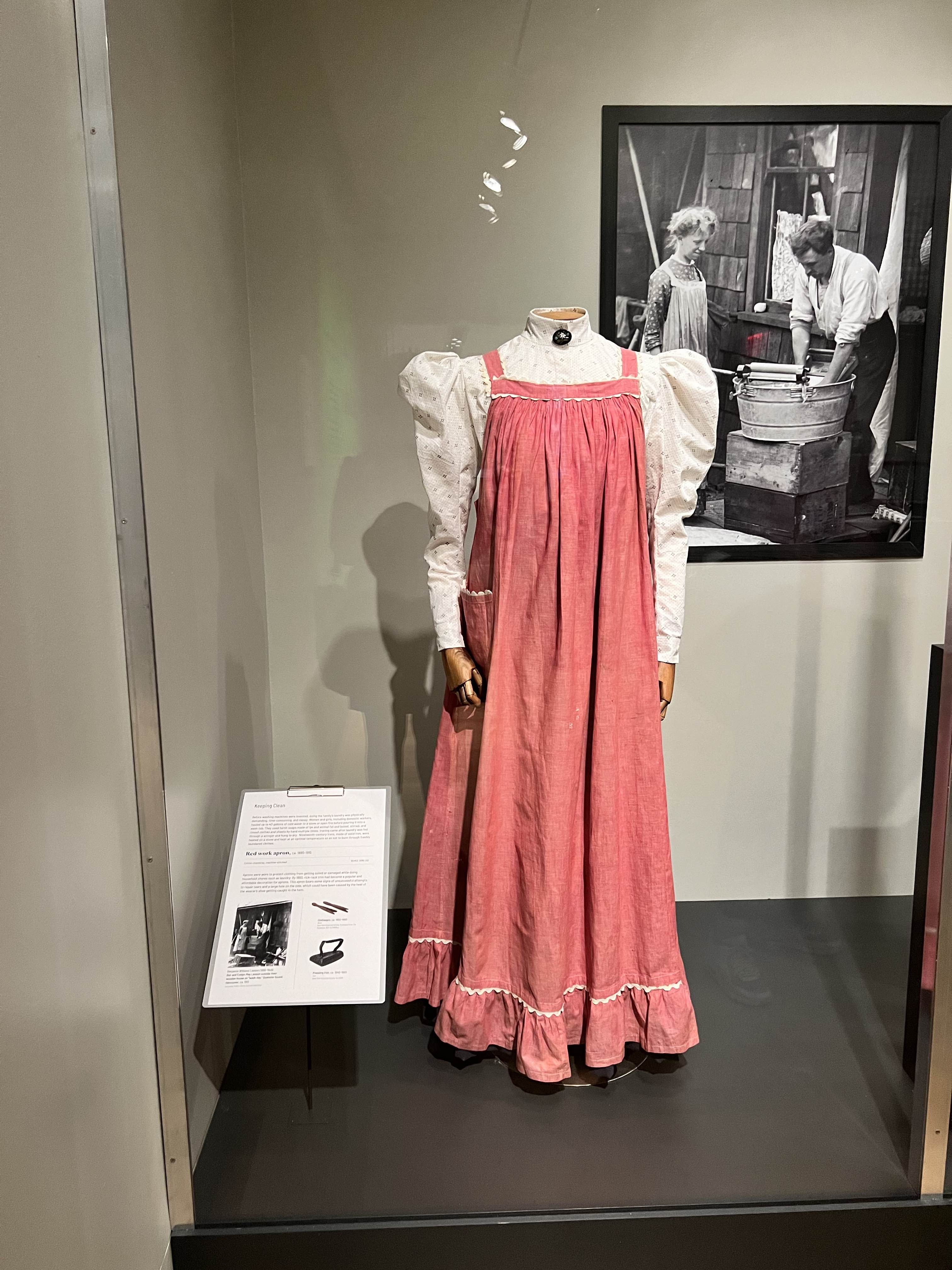
Women’s bodies had to be hidden as well, under floor-length frocks and petticoats that by today’s standards, seem completely impractical, especially in the summer. What was practical, however, were the various types of aprons that were worn to protect these garments from the recurring stains and rips from rigorous housework and child-rearing.
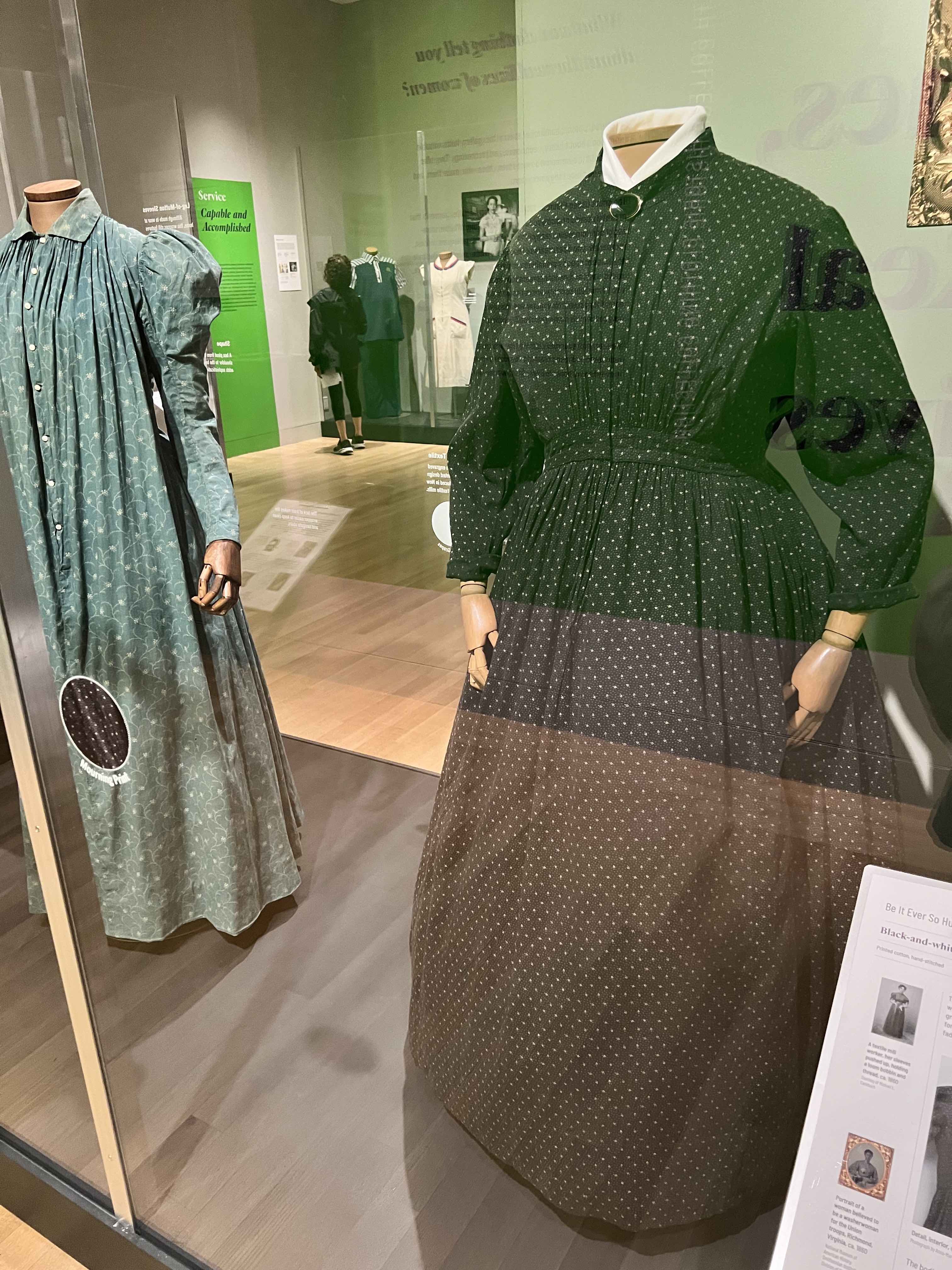
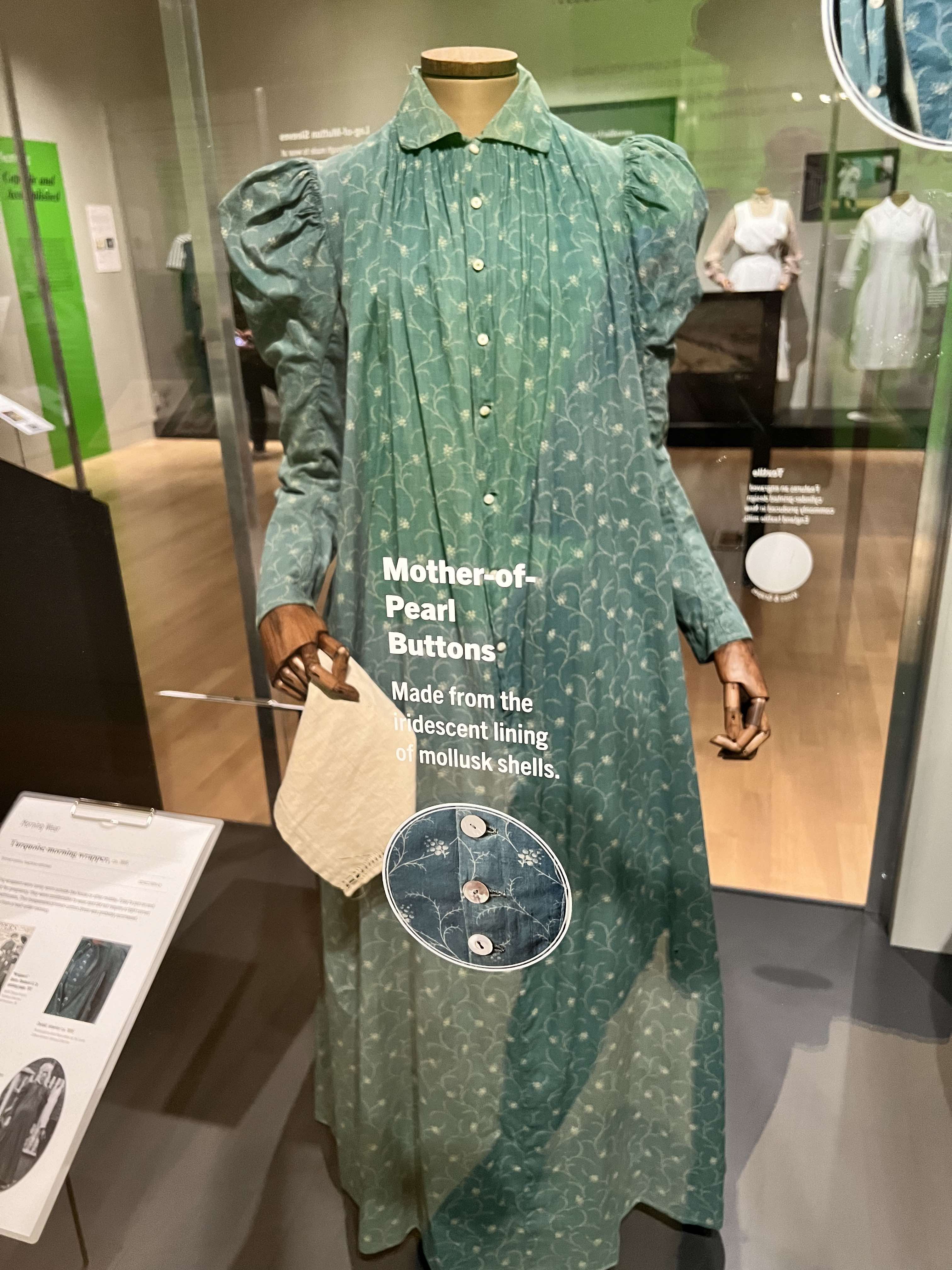
Morning wrappers were considered the housecoats or robes of the era, and were named as such because no self-respecting woman would be seen in her wrapper anytime after noon. There were also “porch dresses” that were nice enough to wear on the front stoop in view of family and neighbors, but would never be worn into town.
What struck me about seeing these dresses up close was how many times they’d been mended. Repeated repairs demonstrate how long these garments remained in use and how valuable ordinary clothing was to these women. The concept of disposable “fast” fashion would have been unthinkable to this generation.
2. workwear: pink-collar jobs & feminine uniforms
Maid. Waitress. Nurse. These were common jobs for women in the early to mid-twentieth century. A public extension of the work they’d been doing at home for years, the uniforms worn reflected standard gender norms of the time…dresses or skirts (at least until the 1970s), feminine color palettes, and cinched waistlines that accented a woman’s figure.
In addition to identifying women as employees, uniforms also represented where these women fit within a gendered and economic society. A uniform symbolized the dignity of work while also posing as social commentary about the individual doing the work.

And while maids, waitresses, and nurses were finally being compensated for the tasks they performed, they were still doing “pink jobs” that were considered acceptable forms of “women’s work.”
3. public dress: the pressure to cover up and be “lady-like”
Many factors have influenced how women are expected to dress in public, and most have something to do with religious norms and patriarchal dictates to “cover up” and hide the female body, lest helpless men be led astray by their uncontrollable desires.
Growing up in the South, I remember my mother telling me that it was “trashy” to wear a dress or skirt without pantyhose, even in hot weather. She would also remind me to “act like a lady” – whatever that meant – when I left the house. These types of rules were passed down from generation to generation, continuing on until the “youthquake” and sexual revolution of the 1960s and ’70s dramatically expanded the range of clothing women could wear—and the identities they could express—in public.
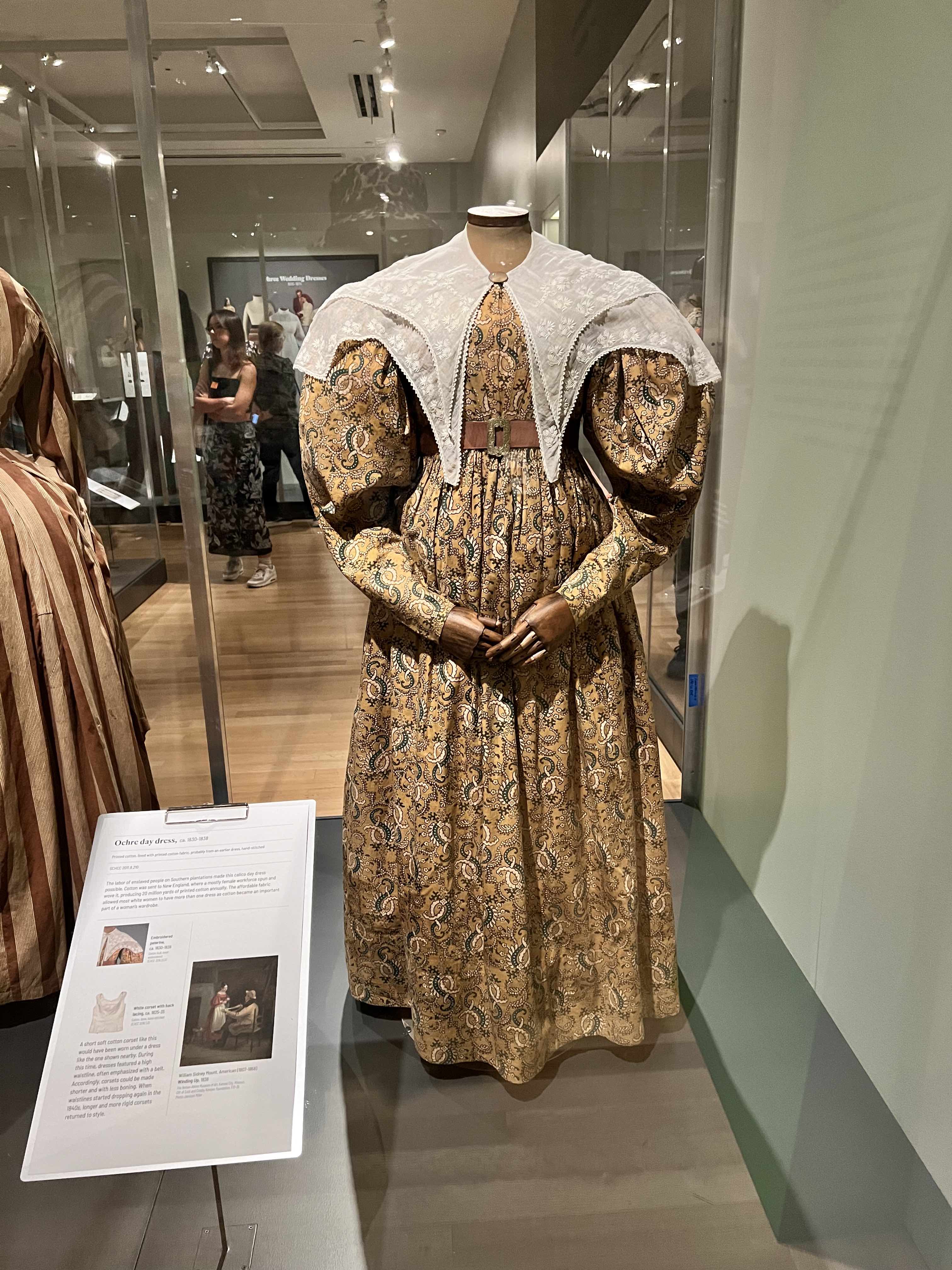
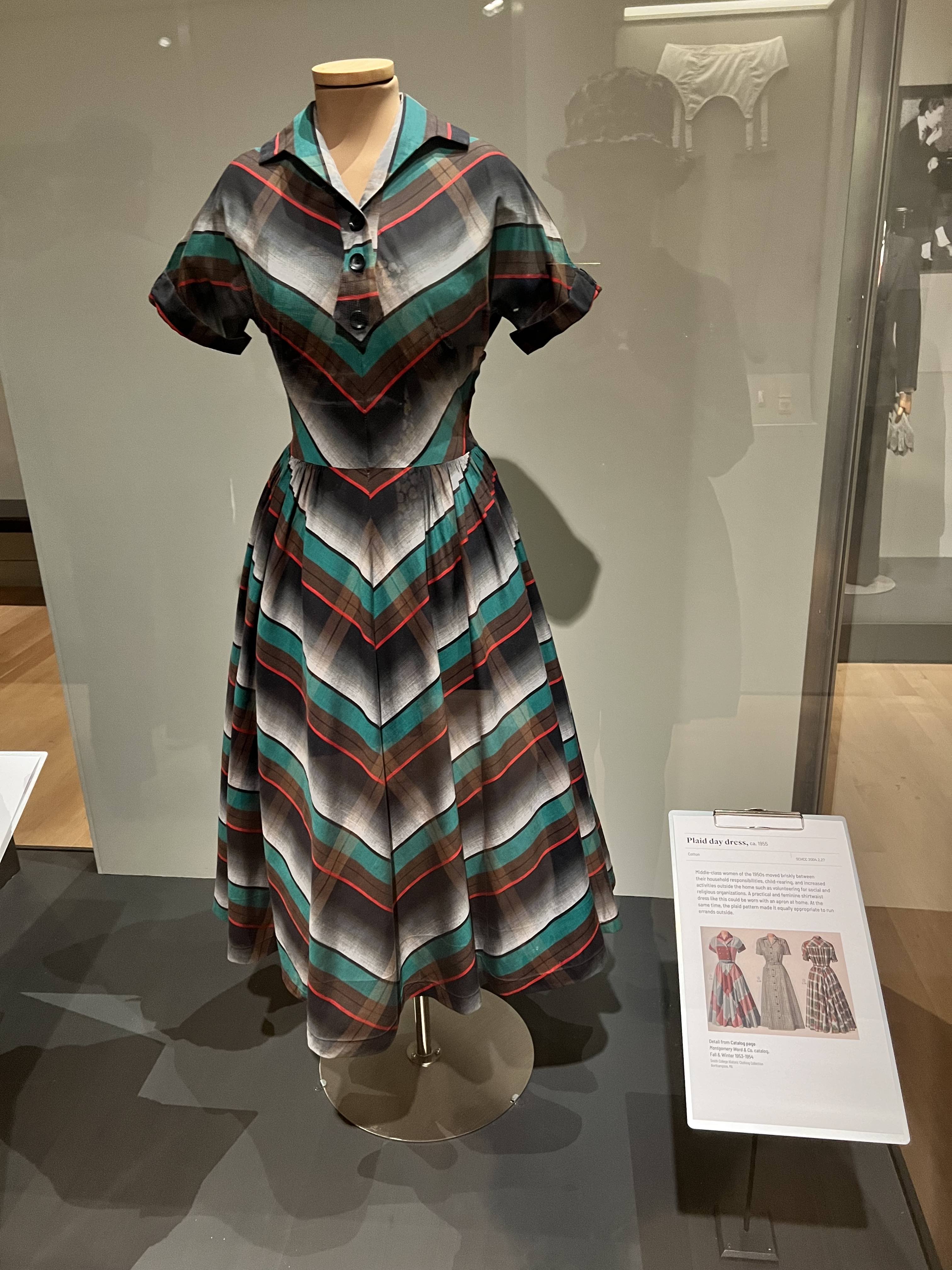

The span of the clothing in this section of the exhibit ranges from a full-length, full-covering Civil War-era dress to a fluid, body-conscious Diane von Furstenberg wrap dress from 1977, a symbol of the independence and sexual confidence associated with that decade. There was also a polished 1950s housewife ensemble that could have come straight out of June Cleaver’s closet – or Betty Draper’s.
4. traditional rites of passage: marriage, motherhood, MOURNING
When we think of rites of passage for women today, we think of graduating high school, getting a college degree, first job, buying a house, and then perhaps marriage and children if that’s what they want. For much of the period represented in this exhibition, however, the recognized milestones of women’s lives were far narrower: marriage, motherhood, and mourning. And there were strict dress codes for each.
The wedding, maternity, and mourning clothes displayed in this part of the exhibit demonstrate how garments publicly marked the narrow life stages through which women were expected to pass. Wedding gown styles changed with each new decade, but remained primarily white. Maternity clothes accommodated pregnancy while conforming to conventions that discouraged women from publicly emphasizing the pregnant body. Nineteenth-century mourning conventions could require widows to wear black for an extended period, sometimes for a year or longer.
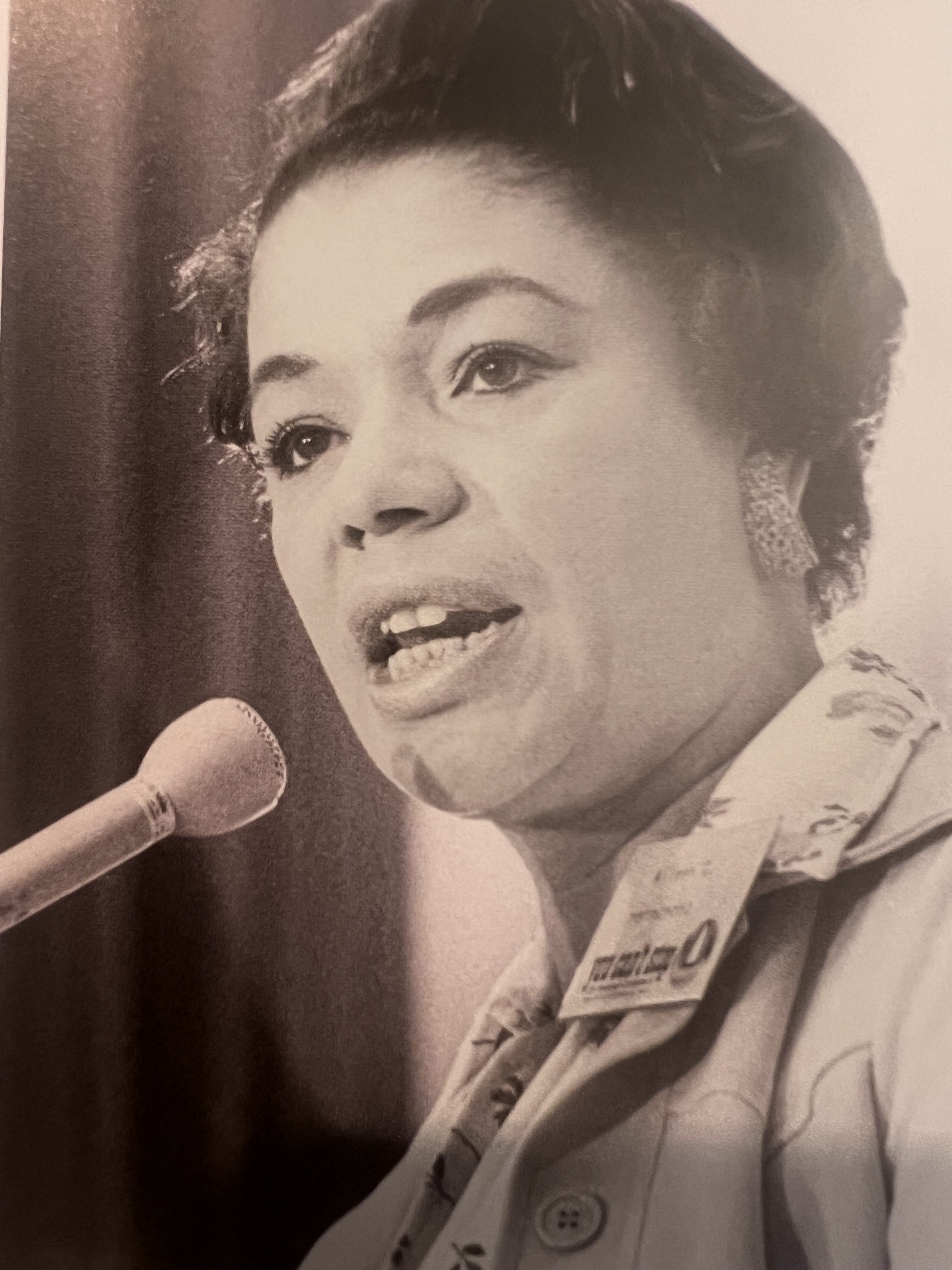
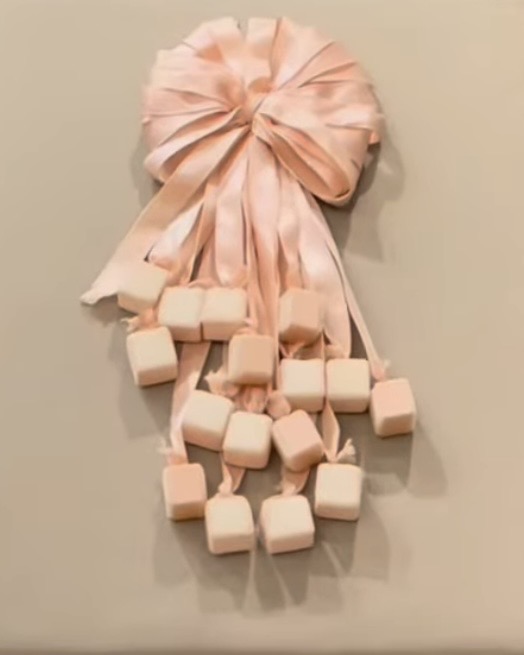
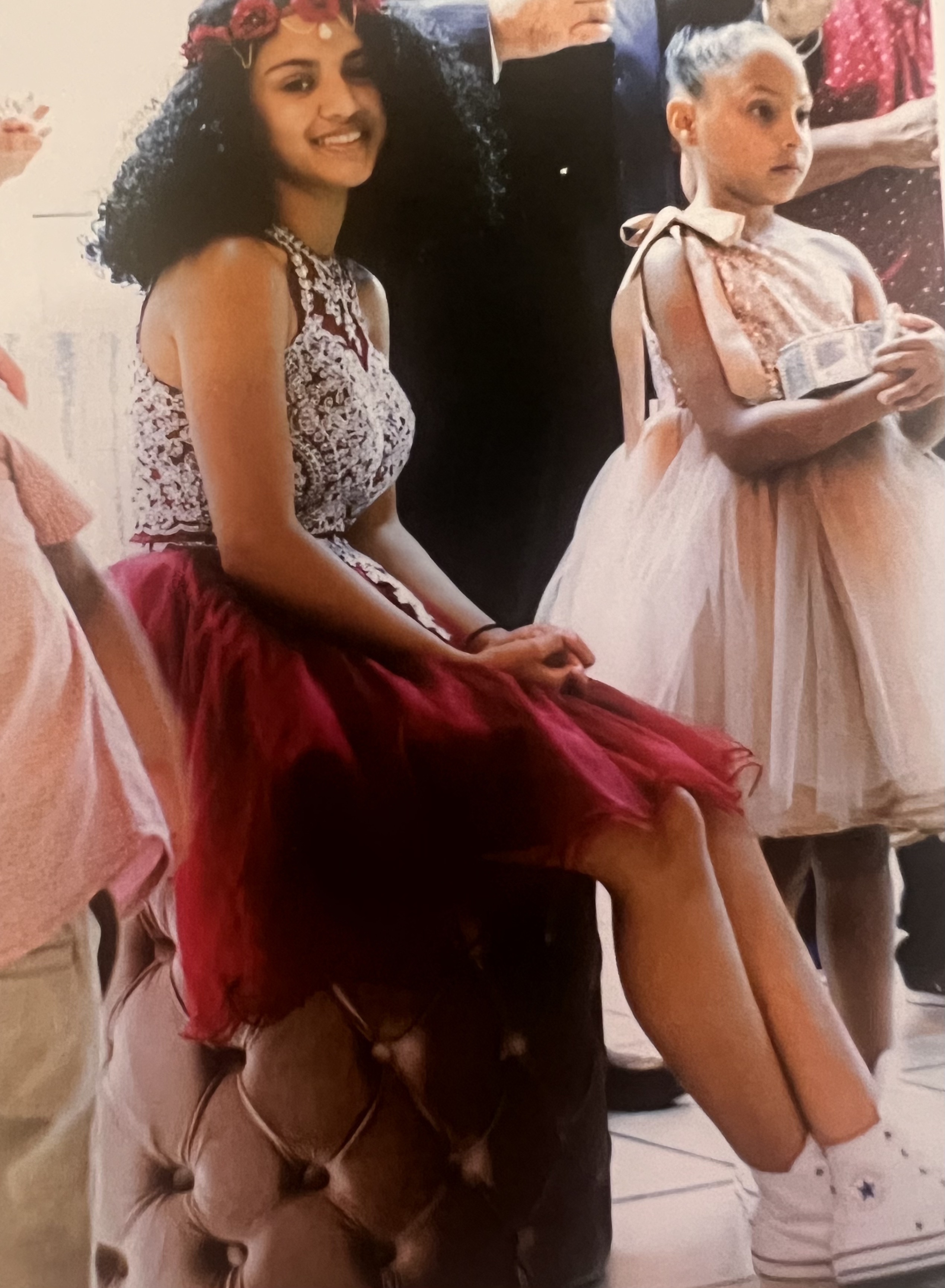
My two favorite pieces from this part of the collection were representative of the more modern rites-of-passage, including a sixteenth-birthday corsage made from sugar cubes and worn by Aileen Clarke Hernandez, who later became the second president of the National Organization for Women, and a red quinceañera dress worn by a modern fifteen-year-old who decided to pair it with Converse high-top sneakers.
5. PUSHING BOUNDARIES: women rising & rebelling
The final part of the exhibition celebrates the women who refused to accept societal norms and helped push the boundaries of equality and freedom in both how they dressed and how they lived.
From gender-bending pantsuits and overalls to sexually liberating miniskirts and halter tops, women were increasingly claiming the right to wear whatever they wanted and express themselves without apology. They also organized and protested in slogan T-shirts that turned the body itself into a public platform for resistance—to things like patriarchy, inequality, and war. This was the point in the exhibition where the past caught up with the future.
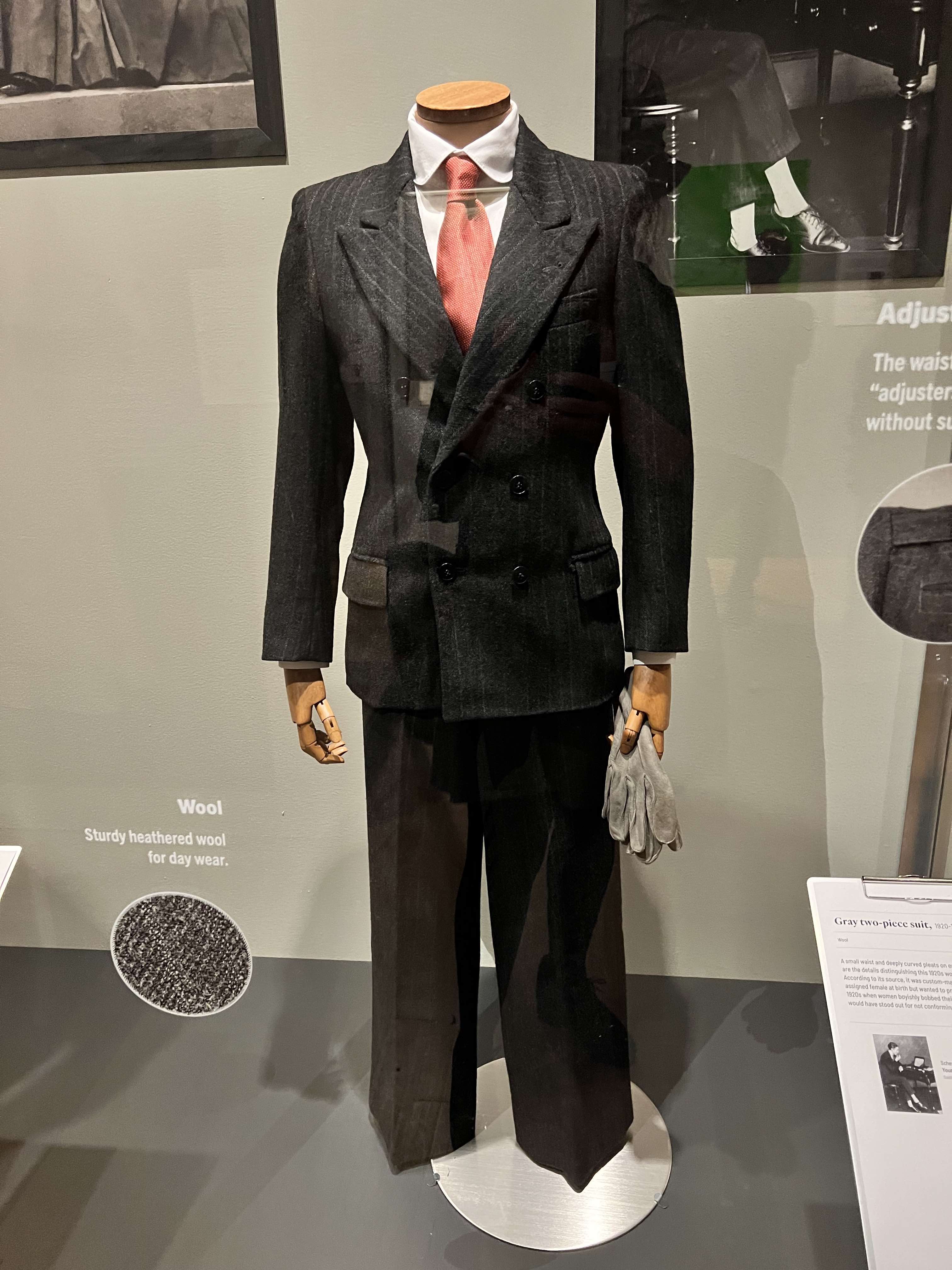
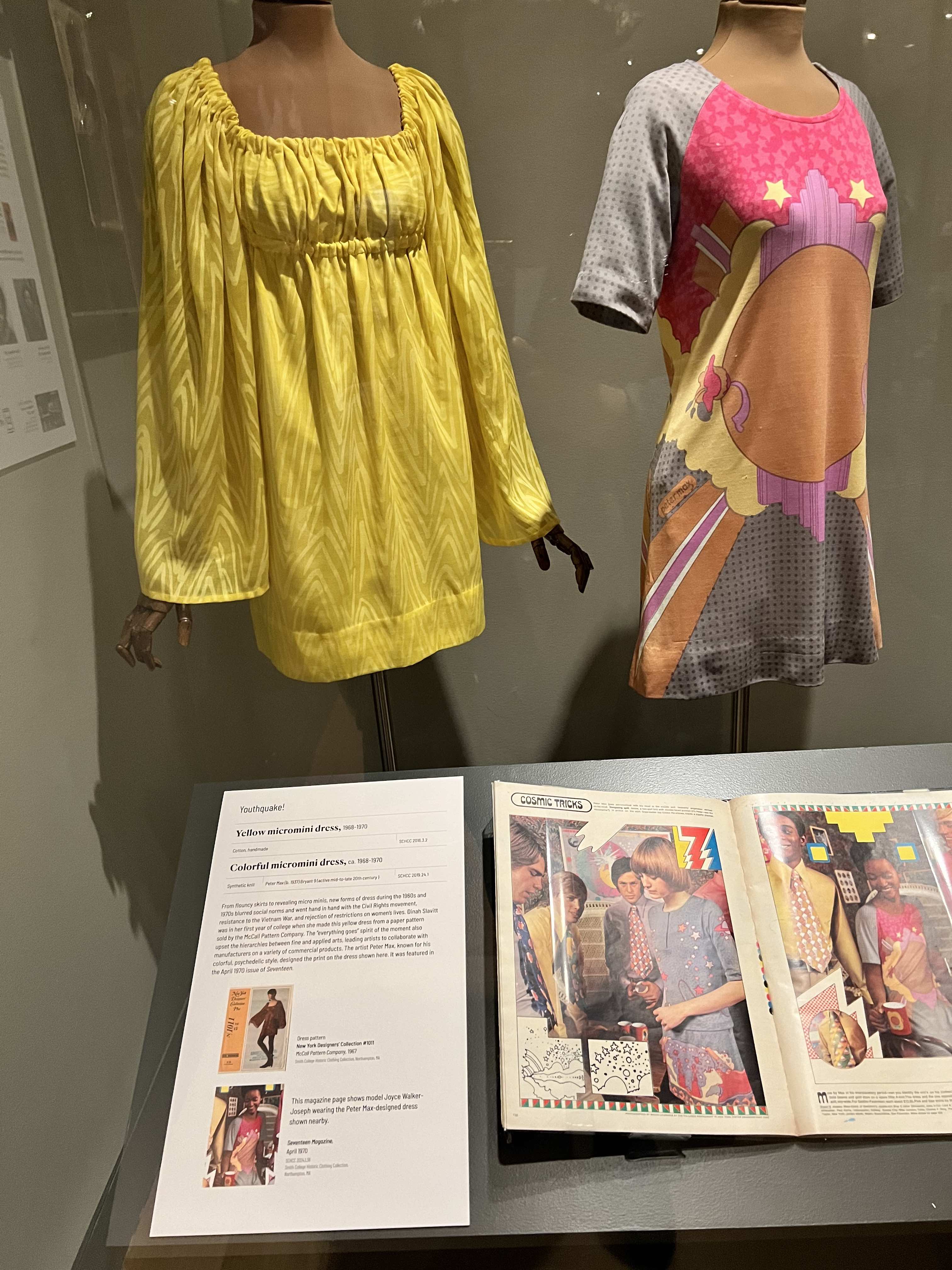
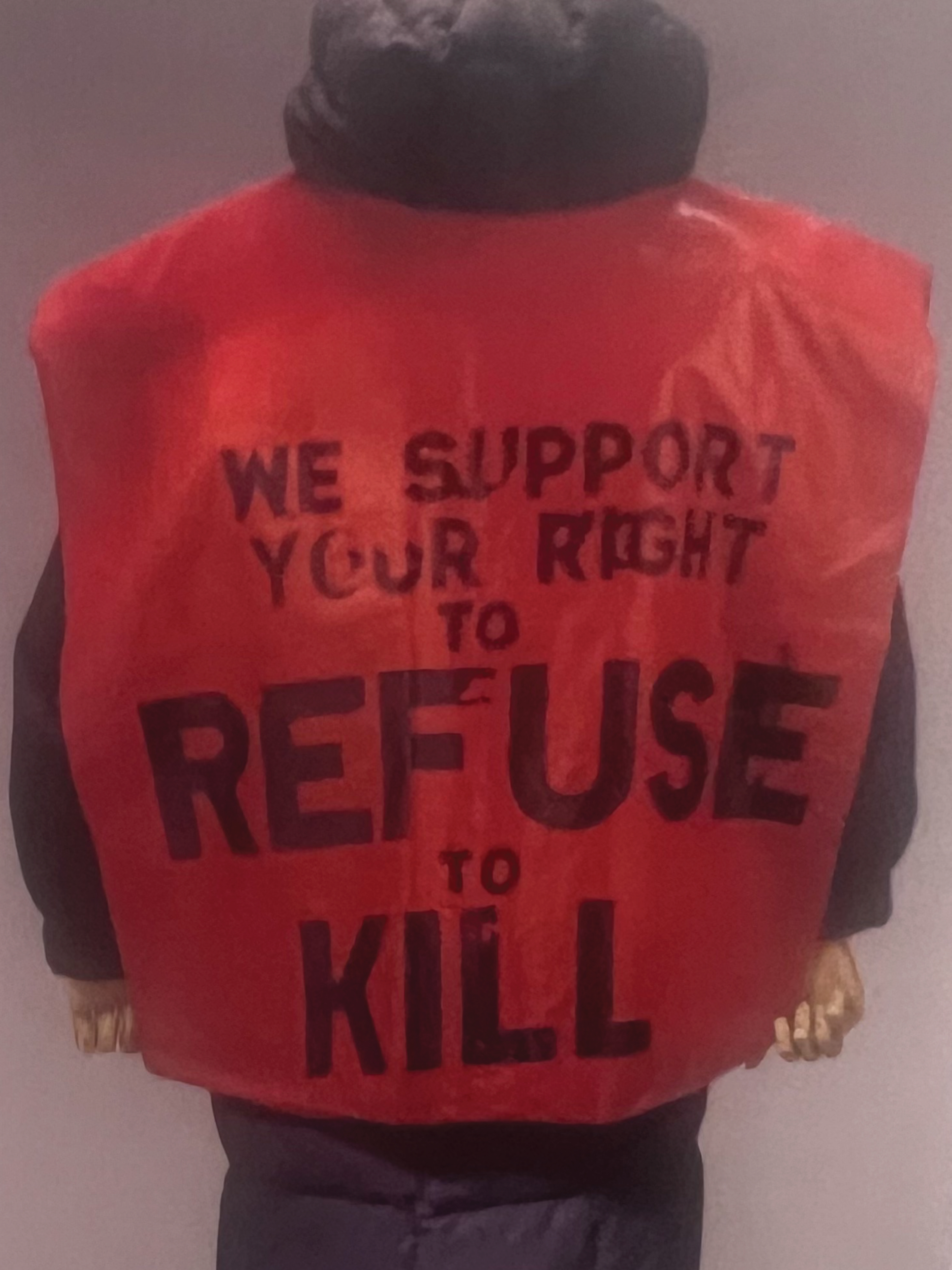
Clothing changes. Women’s lives change. But society’s impulse to control how women present their bodies has proved remarkably persistent. I thought about the 2017 Women’s March I attended in New York City and the sea of pink “pussyhats” I witnessed marching towards Fifth Avenue. One day (if it hasn’t happened already) a pink pussyhat will sit pristinely in a museum case as evidence of twenty-first-century women still rising, still rebelling.
As one of those rebel women, I wonder what future museum-goers would think about my ordinary clothing. As I write this article, I’m wearing black jeans, a black sweater, and a black New York or Nowhere baseball cap. Will people assume I was in mourning because of my all-black wardrobe? Or will they simply understand that I was a New Yorker?
Real Clothes, Real Lives: 200 Years of What Women Wore, featuring selections from the Smith College Historic Clothing Collection, was on view at The New York Historical from September 27, 2024, through June 22, 2025. Visit the museum’s website here.
Want to learn more?

For more stories about fashion history and museum collections in NYC, click below to sign up for my newsletter.

